

Both glass and wrought iron meet Texas pool barrier requirements, and if you’re weighing custom glass fencing solutions against a more traditional option, the differences become clear over time. Maintenance demands, sightlines, corrosion resistance, and day-to-day function all factor into which material makes more sense for your property.
This comparison covers pool fences and railing applications. We install glass. We do not install iron. That context matters, and we are stating it clearly so you can weigh what follows accordingly.
The Core Difference in Sightlines
A wrought iron fence is a solid visual barrier. It meets the height requirement and restricts access, but it also blocks the view of the pool from inside the home. A parent sitting in the kitchen cannot see through it.
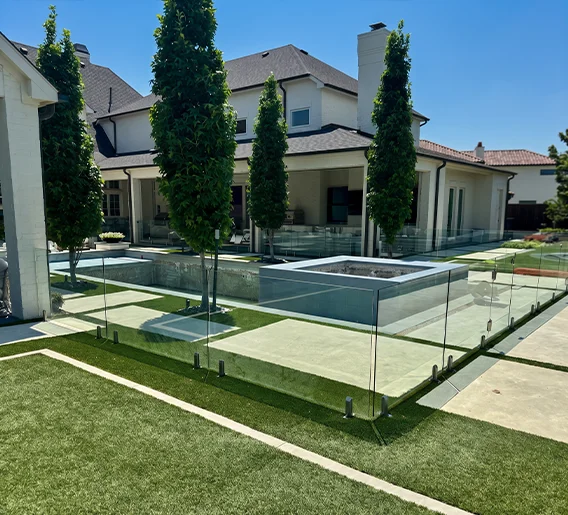
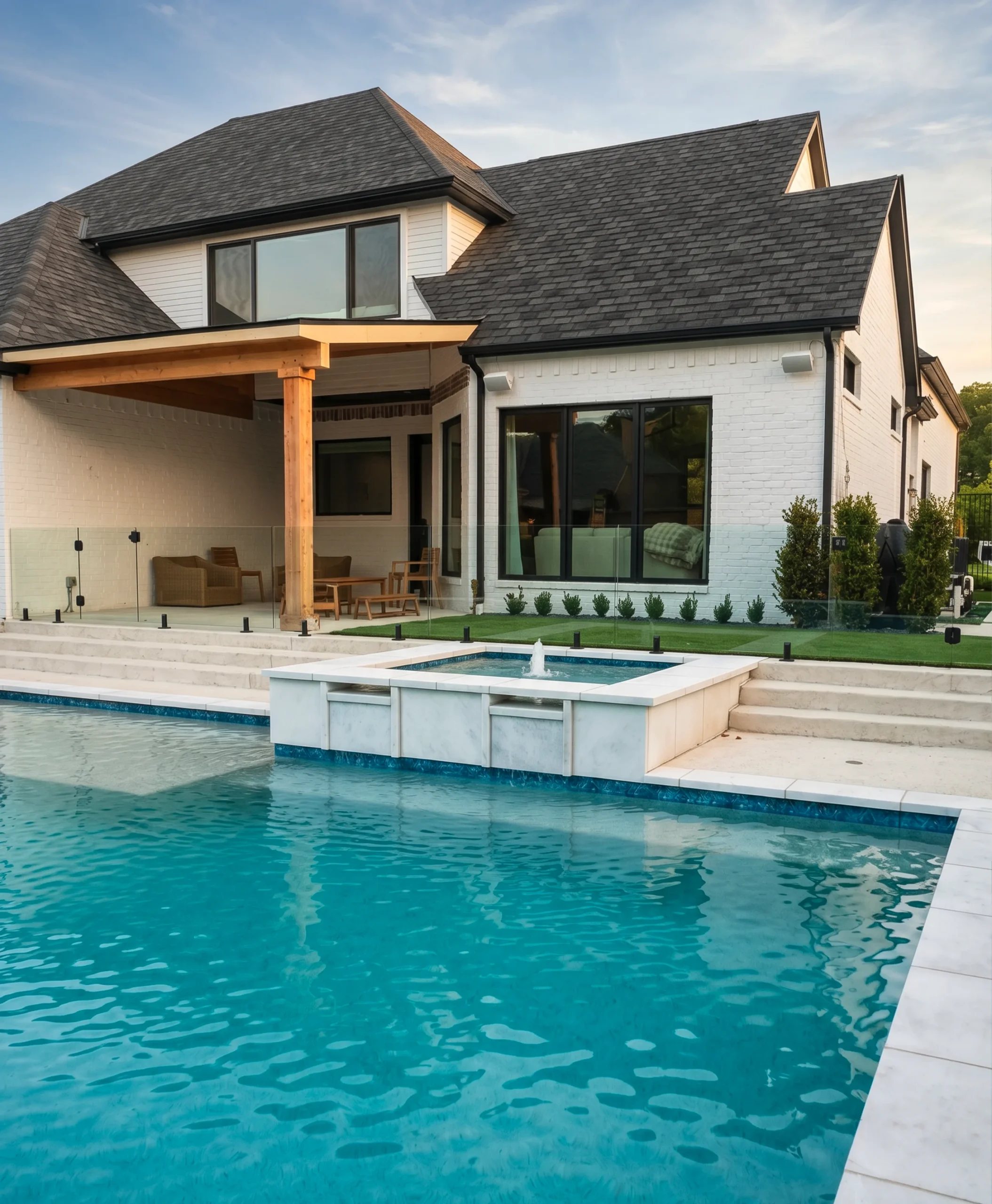
A frameless glass pool fence keeps the barrier in place while maintaining a clear view from inside the house. That unobstructed sightline is a passive safety layer on top of the physical barrier itself. For homeowners with young children or pets, it is one of the most practical reasons to choose glass over iron.
Maintenance Over Time
Wrought iron requires regular maintenance to stay in good condition. Pool environments accelerate that maintenance cycle. Chlorine off-gassing, splash exposure, and Texas humidity all break down paint coatings faster than a standard outdoor fence. Once the coating is compromised, rust follows.
Tempered glass does not rust, warp, or require repainting. The maintenance requirement on a glass fence comes down to cleaning the panels periodically and inspecting the stainless steel hardware annually. We use top-grade stainless steel hardware selected specifically for corrosion resistance in pool environments. The long-term maintenance cost of glass is lower.
Structural Comparison
Wrought iron fences use vertical pickets and horizontal rails welded into panels. The structure is strong but creates horizontal climbing points. A child can place a foot on the bottom rail and step up, and Texas pool barrier code restricts climbing features for exactly that reason.
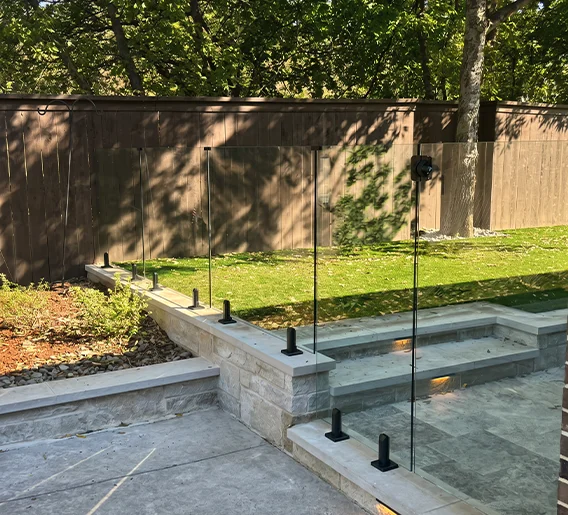
A glass panel has no horizontal rails and no footholds. A frameless glass fence with properly spaced spigot mounts offers a smooth, featureless surface with no purchase points for a child to step on. That structural characteristic is part of why glass performs well in compliance-focused applications.
Cost Comparison
Wrought iron pool fencing typically costs less per linear foot than frameless glass. Semi-frameless glass is closer in price to iron on longer straight runs. Frameless glass with 1/2-inch tempered panels carries the highest upfront cost of the three options.
The longer-term picture changes that comparison. Iron requires repainting every few years in a pool environment, with the cost of that work applied repeatedly over the life of the fence. Glass requires no repainting. The material cost difference narrows meaningfully when maintenance cycles are factored in across 10 to 15 years.
Appearance on a High-End Property
Wrought iron has an established aesthetic. It works well with traditional home styles and brick exteriors. On a contemporary or transitional home, it can feel dated or visually heavy.
Frameless glass reads as clean and modern regardless of the architectural style because it adds no visual mass to the yard. Real estate professionals in DFW have noted that glass barriers photograph better than iron on listing photos and tend to appeal to buyers who prioritize aesthetics alongside safety. We cover that topic in more detail in our piece on glass pool fencing and home resale value.
Which One Is Right for Your Property
Iron is the lower upfront cost option. It works, meets code, and has a long track record in DFW. If upfront cost is the deciding factor and the aesthetic and sightline trade-off is acceptable, it is a legitimate choice. Glass costs more upfront, requires less maintenance over time, keeps sightlines open, and performs well in compliance reviews. We carry both general liability insurance and workers’ compensation coverage, and proof is available before any work begins. Call (214) 316-8852 or visit revelationglassfence.com to schedule a site assessment.
Related Topics:
- Pool Code Requirements Texas: What DFW Homeowners Need to Know
- The Impact of Glass Pool Fencing on Your Home’s Resale Value