
A backyard pool means real responsibility, and the best glass fencing in Dallas Fort-Worth, TX, gives you the safety barrier Texas codes require without boxing in your yard.
Glass pool fences have become a popular answer to that question, and honestly, it makes sense when you think about it. You get the safety barrier you need while keeping clear views of your pool area, your kids, your pets, and pretty much everything happening in your backyard. No more craning your neck around wooden slats or chain link trying to see if someone just did a cannonball or fell in.
Not all glass is created equal, and this is where some homeowners get a little nervous about the idea of glass fences. The mental image of shattered glass near a pool where kids are running around barefoot is, understandably, not a great one. But tempered glass is engineered specifically to handle the kind of stress that would destroy regular glass.
Tempered glass goes through a heating and rapid cooling process that makes it roughly four to five times stronger than standard glass. If it ever does break, and this is rare, it crumbles into small granular pieces rather than sharp jagged shards. That’s a safety feature built into the material itself. The glass panels used in residential pool fences are typically half an inch thick, polished on the edges, and designed to withstand wind, temperature shifts, and the occasional impact from a pool toy or a wayward soccer ball.
Regular glass would be a terrible choice for this application. Tempered glass, on the other hand, meets the durability requirements that building codes demand and gives you peace of mind knowing the material can hold up to real life in a busy backyard.
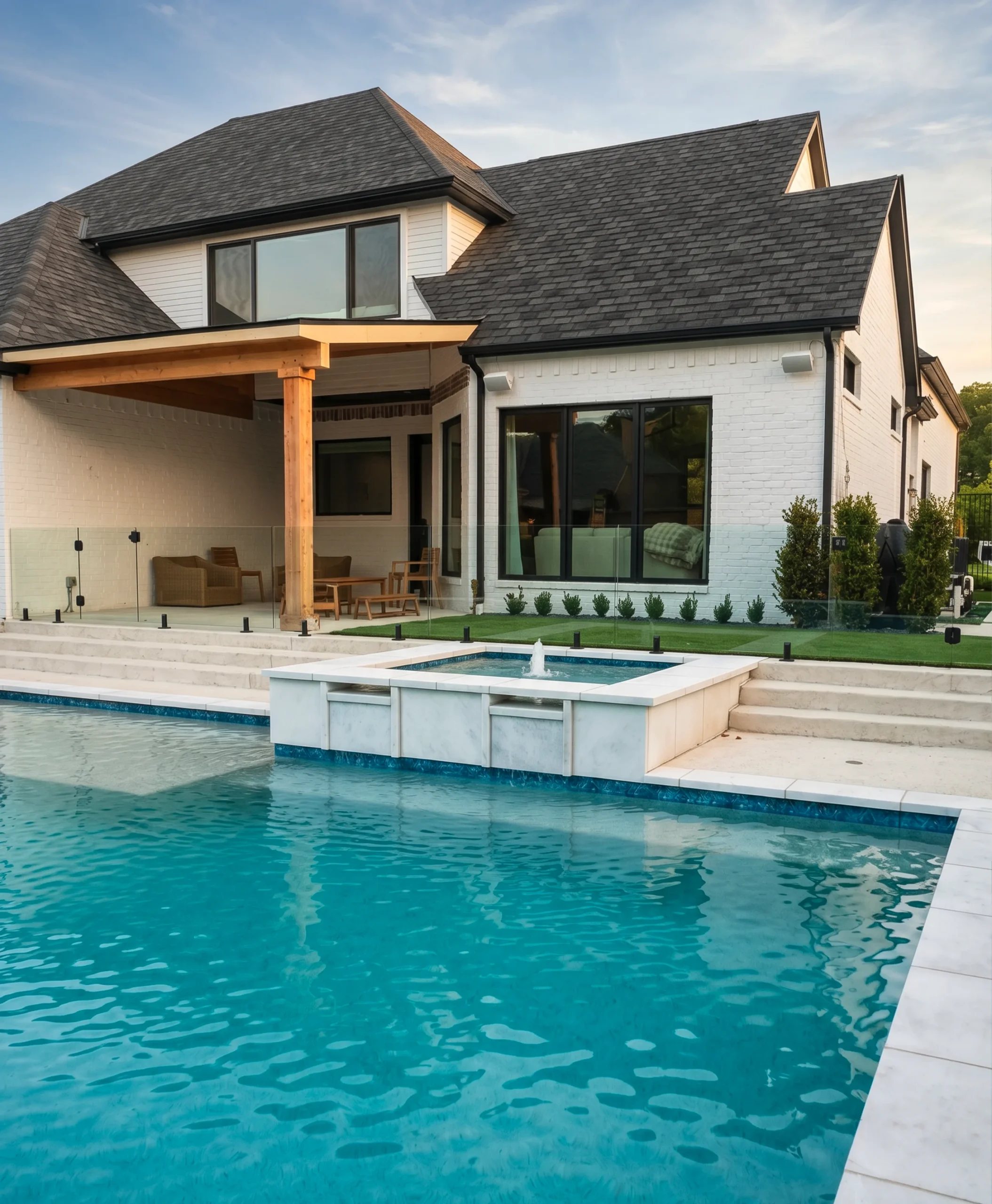
One of the best things about glass pool fences is how well they adapt to different yard layouts. Whether your pool is surrounded by concrete decking, natural stone, grass, or some combination of all three, the transparent panels don’t compete with your surroundings. They just kind of disappear into the background while still doing their job.
This flexibility matters if you’ve worked with architects or landscape designers to create a specific look for your outdoor space. A chunky wooden fence or a metal railing system might clash with the style you were going for. Glass fencing tends to complement rather than compete. It’s modern without being flashy, sleek without feeling cold, and functional without sacrificing beauty.
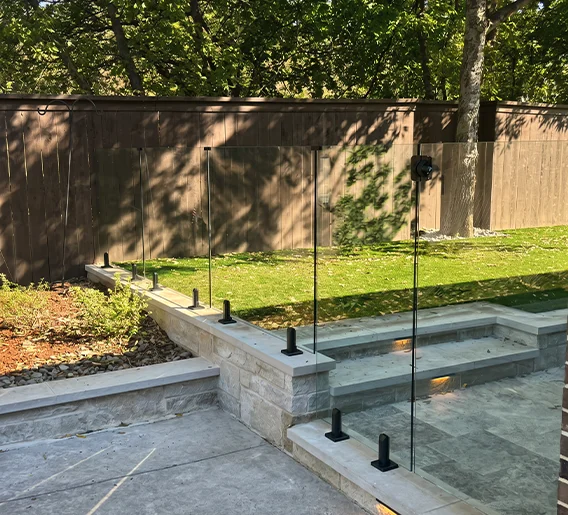
For properties with elevation changes, slopes, or irregular shapes around the pool area, glass panels can be custom cut and positioned to follow the terrain. That’s harder to do with prefabricated fence sections that come in standard sizes. The final product ends up looking intentional and tailored to your specific yard rather than like something you grabbed off the shelf at a home improvement store.
Get Your Dream Glass Fence Today.
A glass pool fence on its own is just a barrier. What makes it functional as a safety system comes down to the hardware, the gate design, and how everything is installed. Most local building codes in Texas require pool barriers to include specific safety features that prevent unsupervised access, especially by young children. Here’s what compliant pool fence installations typically need to include:
These details matter more than most people realize. A beautiful glass fence with a gate that doesn’t latch properly isn’t doing its job. The whole point is to create a safety barrier that keeps kids and pets safe without requiring constant supervision or reminders to close the gate. Any reputable installer will make sure your fence meets these standards before the job is considered complete.
Installing glass pool fences isn’t really a weekend DIY project. The panels are heavy, the tolerances are tight, and getting everything level and secure requires experience. Most homeowners work with contractors who specialize in this type of installation, and for good reason.
A typical installation starts with measuring the pool area and identifying where posts or spigots will be mounted.
The most common setup involves anchoring into concrete pool decking, which provides a stable foundation for the glass panels.
Once the anchor points are set, the glass panels are positioned and secured with hardware designed to hold them firmly in place while still allowing for slight movement from wind or thermal expansion.
Revelation Glass Pool Fences and Railings handles the entire process from initial consultation through final walkthrough. Their installations come with a one year workmanship warranty and a two year product warranty, which is worth asking about if you’re comparing quotes from different companies. Not every installer stands behind their work the same way.
Glass pool fences aren’t one size fits all. Panel heights can be adjusted based on your preferences and local requirements. Hardware finishes can be selected to complement your existing outdoor fixtures and overall property style. Gate placement can be configured based on how you actually use your backyard and where traffic naturally flows.
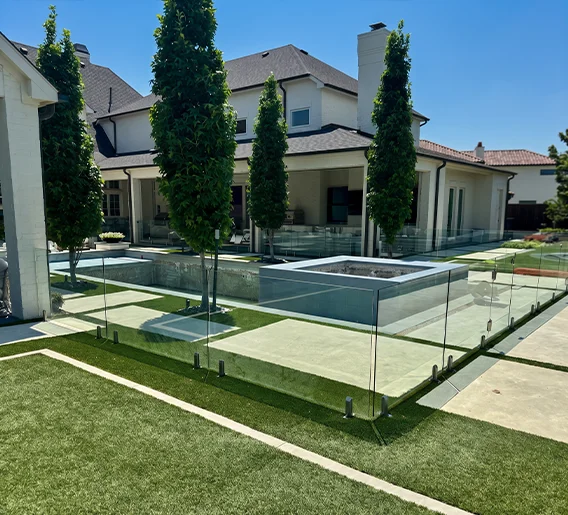
The frameless design that most residential customers choose features minimal visible hardware, allowing the glass panels to appear almost floating. This creates a clean, elegant look that works with just about any architectural style, from traditional Texas ranch homes to more contemporary builds. The goal is a final product that feels like it belongs in your space rather than something that was added as an afterthought.
If you’re working with a tight budget, there are ways to adjust the scope without compromising on safety. Fewer gates, simpler hardware, or standard panel sizes can bring costs down while still delivering a durable result that keeps your pool area secure and your sightlines wide open.
Requesting a quote is pretty straightforward. Most installers will want to see your pool area in person or at least review photos and measurements before giving you accurate prices. From there, you can discuss timelines, hardware options, and any specific concerns about your property. If you’re in the Dallas-Fort Worth area and want to talk through your options, contact Revelation Glass Pool Fences and Railings to set up a consultation.

Get Your Dream Glass Fence Today.
Give us your details and we’ll reach out to discuss your dream glass fence.
Revelation Glass Pool Fencing & Railings is your trusted source for premium glass pool fences and railing systems, from expert fence installation to quality materials.
Peyton Borders
1 month ago
We had the best experience with Matt at Revelation Pool Fencing. He truly made my vision come to life. I wanted something that kept our little ones safe without ruining the aesthetic of our pool, and he absolutely nailed it. It looks so modern and clean and honestly made the whole space look even better. Matt was prompt, professional, and so easy to communicate with.
Crystal Williams
1 month ago
Revelation Glass Fence did a wonderful job from the first call through the installation. The finished product is fantastic and the customer service and installation were top notch. They really know what they are doing and we HIGHLY recommend Revelation Glass Pool Fencing!
Nicholas Martin
1 month ago
We had Revelation Glass install a glass railing for us, and we couldn't be happier. Their team was skilled, efficient, and detail oriented. The finished railing looks amazing, and we highly recommend Revelation Glass for your next project.
Django Agredo
2 months ago
We hired Revelation Glass Pool Fences and Railings for a glass pool fence at our home in Royse City, and the entire experience was smooth from start to finish. The team walked us through the design options and made sure everything met safety requirements without taking away from the look of our backyard.
Allison Holland
1 month ago
Exceptional quality and best pricing we were quoted across DFW! It's rare to have both of those attributes! Very highly recommended! Skilled craftsmanship and timely.
Patricia Gorman
1 month ago
Wanted a gate to protect my grand babies from the pool without messing up the view. I highly recommend this company — very professional and fast installation and I love love my new gate!
Yes, and that’s exactly why it’s used for this application. Tempered glass goes through a heating and rapid-cooling process that makes it around 4 to 6 times stronger than regular glass. The panels used in residential fencing are typically 12mm thick with polished edges and rounded safe corners. In the rare event one breaks, the glass breaks into smaller, rounded pieces rather than sharp shards, so you’re not dealing with dangerous fragments near bare feet. It’s the same category of safety glass used in shower doors and car windshields.
Most Texas jurisdictions follow the International Swimming Pool and Spa Code. The state baseline calls for a barrier at least 48 inches (4 feet) tall, measured from the ground on the side away from the pool, with no gaps that would allow a 4-inch diameter ball to pass through. Gates must be self-closing and self-latching. That said, local codes can be stricter, for example, Dallas requires residential pools to be enclosed by a fence at least six feet tall. We always confirm the exact requirements for your specific city before installation.
It will, as long as the gate hardware is right, which is where a lot of DIY or budget installs fall short. Texas code requires that pool gates be self-closing and self-latching, with the latch release positioned at least 54 inches above the ground so it stays out of a child’s reach. The gate also needs to swing away from the pool. A glass fence with a gate that doesn’t latch properly isn’t doing its job, so we make sure every installation meets these standards before we call it complete.
The panels we install are tempered safety glass, and pool fencing typically uses glass that’s at least 12mm thick. The thicker the panel, the better it handles wind load, so it holds up to the storms and gusts that come through DFW. Tempered glass is also more scratch- and heat-resistant than regular glass, which matters for a material that sits in full sun and shifting temperatures year-round. An engineer determines the exact thickness needed based on your specific layout.
Yes. This is one of the bigger advantages over prefabricated fence sections that only come in standard sizes. Glass panels can be custom cut to almost any size and shape, and can follow any layout including gentle curves and sloped areas. So if your pool deck has elevation changes or an unusual footprint, the fence gets built to follow your terrain rather than forcing your yard to accommodate off-the-shelf parts. The result looks intentional instead of patched together.