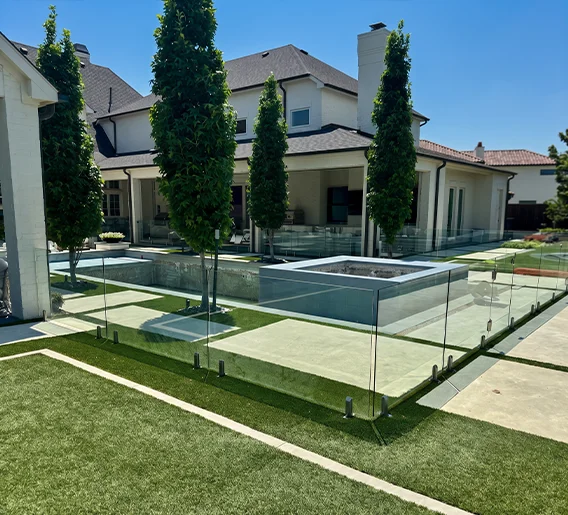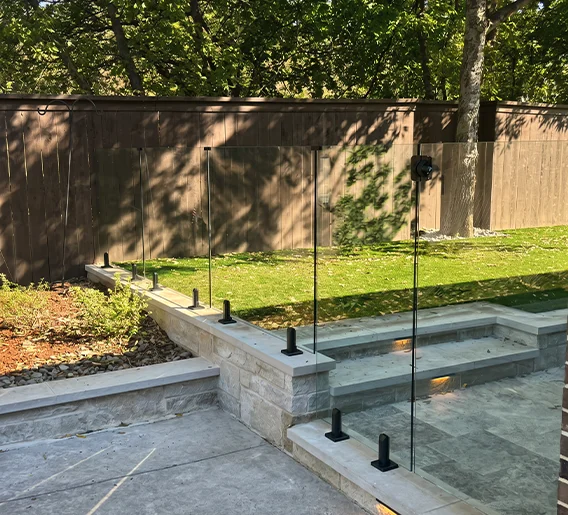


Glass pool fencing is a permanent installation. Done correctly, it lasts 20 years or more with minimal upkeep. Done incorrectly, the problems surface within the first year: panels that shift, hardware that corrodes, gates that won’t latch, and fence lines that fail inspection. Most of these mistakes aren’t complicated or unpredictable. They come from hiring the wrong contractor, accepting the wrong materials, or skipping steps that have real consequences. If you’re researching residential glass fence systems for your property, here’s what to know before you commit to anyone.
Mistake 1: Hiring a Generalist Instead of a Glass Specialist
The most consequential mistake most homeowners make is hiring a general fencing contractor to install glass. A contractor who works across wood, iron, vinyl, and chain-link, with glass as an occasional add-on, does not bring the same depth of experience as one whose entire operation is built around glass.
Frameless glass installation requires precise core drilling into concrete. Spigots need to be set at exact spacing and depth, and panels need to align within tight tolerances. A contractor who does this every week handles it without incident. One who does it twice a year is figuring it out on your property.
Ask directly whether glass fencing is their primary service or one of many, whether they subcontract glass work or handle it in-house, and how many glass fencing projects they’ve completed in the past 12 months. Those answers tell you what you’re actually hiring before anyone shows up with tools.
Mistake 2: Accepting 3/8″ Glass When 1/2″ Is Available
Many local installers bid to the 3/8″ minimum because it meets code and costs less to supply. That decision benefits the installer’s margin, not your installation.
Thicker glass handles impact, wind load, and temperature swings considerably better than thinner glass. North Texas hail seasons and the thermal stress of a 105-degree summer followed by a hard freeze put glass pool fencing under real environmental pressure. At 1/2″, tempered glass manages that pressure with meaningful margin. At 3/8″, it’s operating much closer to its limits.
When comparing quotes, ask each contractor specifically what thickness they’re specifying. Two quotes that look similar in price may be using entirely different glass specifications. They are not the same product, and they won’t perform the same over time.
Mistake 3: Ignoring Hardware Grade
The hardware anchoring your glass panels to the concrete deck is what holds the installation together for the life of the fence. Low-grade hardware in a pool environment corrodes, loosens, and eventually fails.
The correct specification for pool-side glass fencing is marine-grade stainless steel. Marine-grade components are built for sustained moisture exposure, pool chemical contact, and the corrosive conditions that exist around any body of water. Standard stainless steel performs adequately in dry environments. Next to a chlorinated pool in North Texas humidity, it’s a different situation entirely.
Ask your installer specifically what grade of hardware they use and whether it’s marine-grade for pool-side applications. If they can’t give you a direct answer, that’s an answer in itself.
Mistake 4: Skipping the Permit Process
In most municipalities, installing a pool barrier requires a permit. Dallas and surrounding cities including Fort Worth, Frisco, and Plano all have specific requirements covering pool barrier height, gate hardware, and construction standards. A fence installed without the required permit may fail inspection and require modification or removal at your cost.
The permit process isn’t complicated, but it has to happen before installation begins. A qualified local installer knows which municipalities require permits, what the inspection process involves, and how to walk you through the requirements for your specific city.
Any installer worth hiring will address permit requirements during the estimate phase, not after the job is done.
Mistake 5: Not Verifying the Gate Hardware Spec
A pool gate is a code component, not just an entry point. Pool barrier requirements specify that gates must be self-closing and self-latching, with the latch positioned on the pool side at a height that prevents young children from reaching it.
A gate that doesn’t close and latch on its own is a non-compliant pool barrier regardless of how clean the rest of the installation looks. This is the component inspectors focus on and the component that matters most in the scenario a pool barrier is designed to prevent.
Before the project is closed out, test the gate yourself. Release it from multiple angles and confirm it swings shut completely with the latch engaging without any manual assist. If it doesn’t, that’s a warranty call that needs to happen before you sign off on the work.
Mistake 6: Not Getting Both Warranties in Writing
A verbal assurance is not a warranty. Before work begins, you should have written confirmation covering two things: a product warranty on the glass panels and hardware, and a workmanship warranty covering the installation itself.
Most local contractors offer one or the other. Both matters because a product failure and an installation failure are different problems with different responsible parties. Clear written terms on both tell you exactly what’s covered and how to get it addressed if something goes wrong.
Don’t accept vague language about standing behind the work. Ask for the specific terms, the duration, and what the process looks like for service calls before you sign anything.
Related Topics: