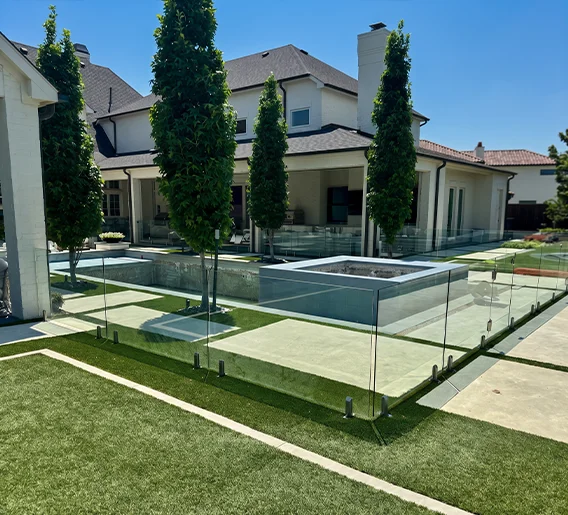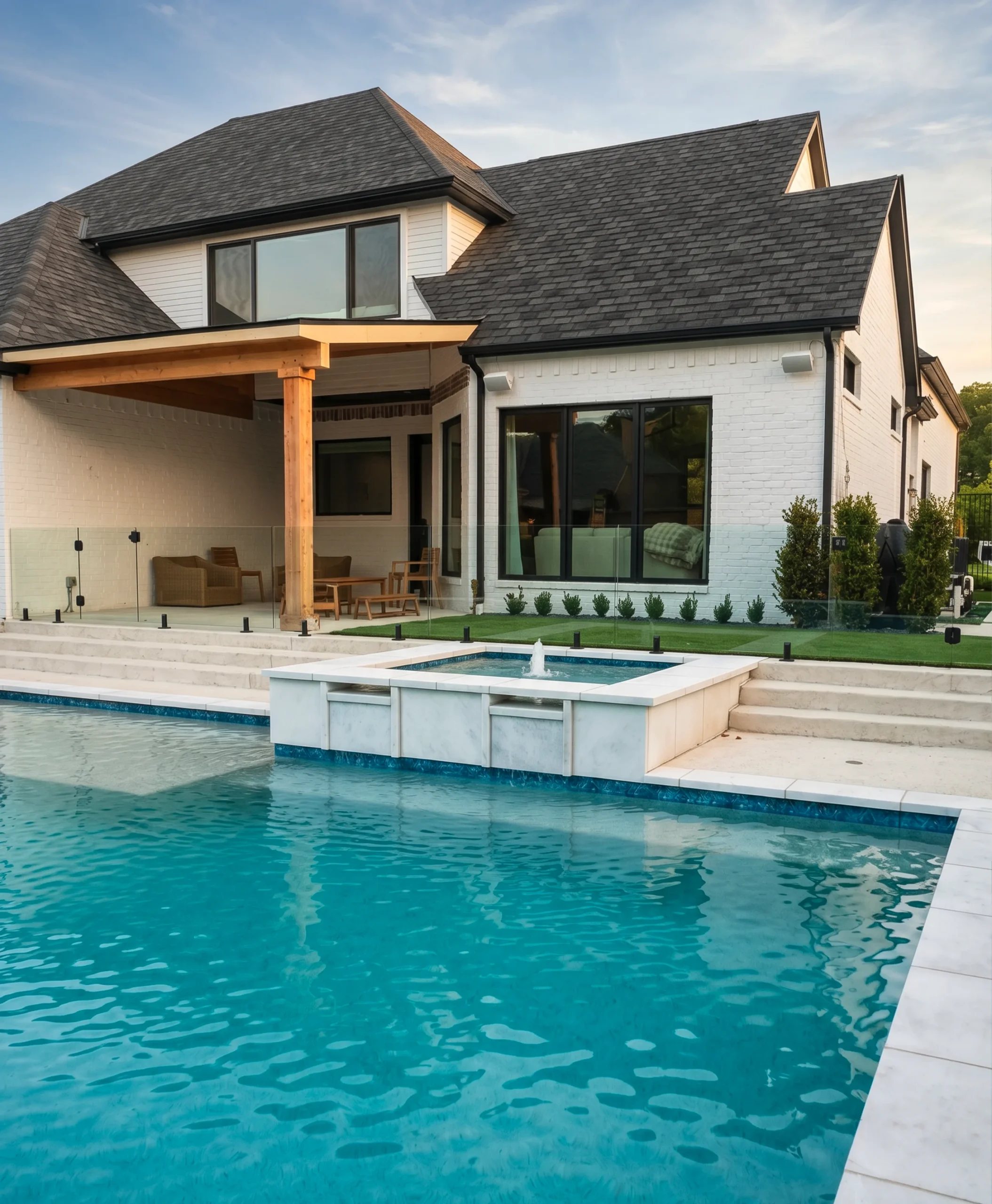

DFW’s newer developments lean heavily toward contemporary builds: clean rooflines, large windows, and open-plan layouts that extend from interior living space out to a covered patio and pool. Brick and stone exteriors are common, but the architectural detailing tends to be minimal, with the house’s character coming from proportion and material rather than ornament. A pool fence that fights that aesthetic, something with heavy posts, decorative scrollwork, or cluttered hardware, pulls the whole backyard in the wrong direction.
Working with a reliable glass fencing team ensures the installation complements the home’s design. Glass solves the aesthetic problem cleanly. The question isn’t really whether to use Glass. It’s about which type of glass installation fits your specific property and which finish choices make it look deliberate rather than default.
Here’s how to think through the options.
Frameless vs. Semi-Frameless: The Core Decision
Every glass pool fence installation starts with this choice. Everything else, hardware finish, glass type, and panel height, is secondary.
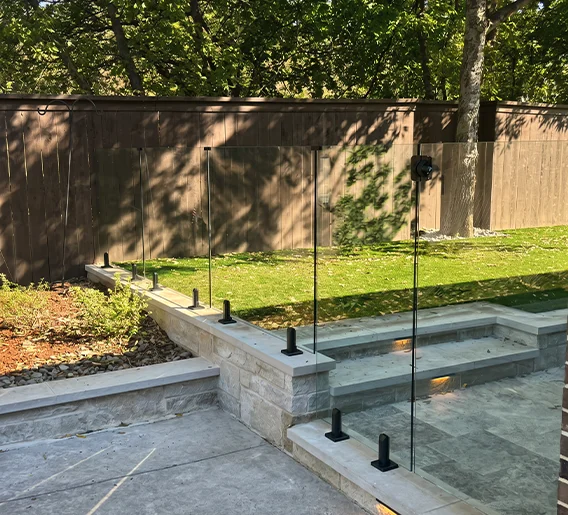
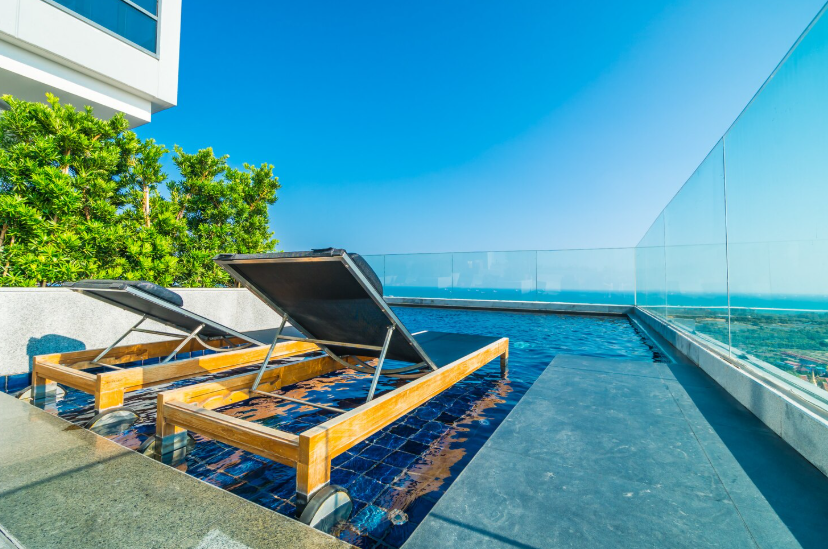
Frameless uses stainless steel spigots mounted directly into the pool deck or ground to hold each panel at its base with no top rail and no posts between panels. The result is as close to invisible as a safety barrier can get. The only hardware visible is a small spigot at the base of each panel and the gate hardware. This is the style most associated with modern residential pools, and it’s what we install most often in DFW. It works particularly well on properties where the pool design is a focal point, and the fence should disappear rather than frame it.
The limitation is structural. Frameless installations require a solid, level mounting surface, a concrete deck or compacted base, and enough room for the spigots to be set with adequate depth. On very soft ground or timber decking without adequate joist support, frameless may require additional site preparation.
Semi-frameless uses vertical posts between panels, typically at 1.2 to 1.5 meter spacing, with the glass sitting in channels between them. It offers more structural flexibility than frameless because the posts distribute the load rather than concentrating it at each spigot base. The visual result is less minimal: you’re aware of the fence in a way you aren’t with frameless, but it’s still clean and contemporary compared to aluminum pickets or wrought iron.
Semi-frameless is worth considering when the budget is a factor, since it typically costs less than frameless, when the mounting surface has limitations, or when the property’s architecture has more traditional elements, where a post structure looks appropriate rather than out of place.
Hardware Finish
Once you’ve settled on frameless or semi-frameless, the hardware finish is the next meaningful design decision. For most DFW homes, this comes down to polished stainless versus brushed stainless.
Polished stainless steel is reflective and sharp. It photographs well and reads as high-end. It also shows fingerprints and water spots more readily, which matters in a pool environment. It suits contemporary homes with other polished metal elements: stainless appliances visible through glass doors, chrome fixtures, and clean white or light grey exteriors.
Brushed stainless is more forgiving to maintain and has a warmer, more subdued finish. It works better with warm-toned brick exteriors and homes where the design language is more transitional than strictly modern. It won’t clash with anything, which makes it the safer default if you’re uncertain.
Matte black hardware has become increasingly popular in newer builds, particularly homes with black window frames and dark rooflines. It reads as intentional and contemporary, and it contrasts cleanly against both clear glass and lighter deck surfaces. It’s worth noting that black-coated hardware requires more attention to maintain, as any chips in the coating create rust points. If you’re considering matte black, ask about the coating specification and the warranty on the hardware finish.
Clear vs. Frosted vs. Etched Glass
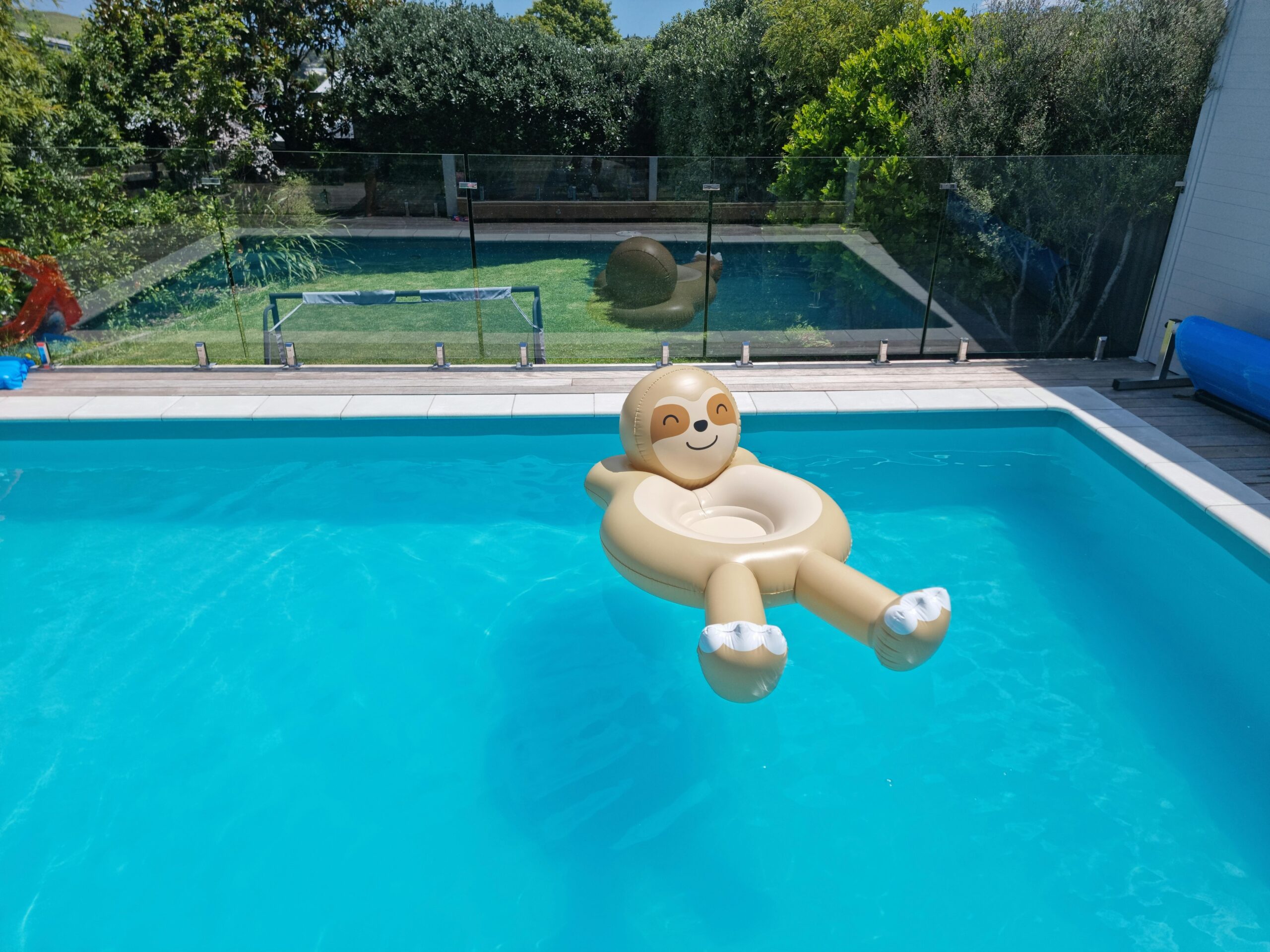
Clear tempered glass is the default for almost every pool fence installation, and for good reason. It maximizes visibility, keeps the pool area feeling open, and doesn’t compete with the home’s architecture. For most DFW properties, clear glass is the right call.
Frosted and etched glass introduces opacity, which is sometimes genuinely useful and sometimes a design choice that sounds good in theory but creates problems in practice. The legitimate use case is when part of the fence runs along a boundary where you want privacy from a neighboring property, or where direct western sun creates glare along a fence line that’s difficult to manage any other way. Frosted panels in that specific run can address those concerns while the rest of the fence stays clear.
Full perimeter frosted fencing is less common in residential pool applications and has a real downside: it reduces your ability to see into the pool area from inside the house, which is one of the primary safety advantages of glass over solid fencing. If privacy is the main driver, there are usually better ways to achieve it, such as landscaping or screening in the specific area, without compromising supervision sightlines. Etched panels with geometric or organic patterns are an option for homeowners who want the fence to be a design feature rather than a background element. We can discuss specific etching options during a consultation.
Panel Height
Texas code requires a minimum of 48 inches. Most residential frameless installations we do in DFW sit at 48 to 60 inches, with 48 being standard for properties focused on clean aesthetics and 60 being common where the pool is at a lower elevation than the surrounding areas or where the household has particularly athletic dogs or teenagers.
Taller panels aren’t just a safety choice; they’re an aesthetic one too. A 60-inch frameless fence has more visual presence and creates a stronger sense of enclosure around the pool. On a property where the pool is designed as a private retreat rather than a visible backyard feature, the taller panel height supports that intention.
Don’t Overlook the Gate
The gate is the element of a glass pool fence that people interact with every day, and it draws the eye more than any other part of the fence line. A panel run that disappears visually still has a gate that announces itself every time someone opens it. For most DFW residential installations, a single inward-swinging gate is standard. Texas code requires pool gates to swing away from the pool, so inward swing means the gate opens toward the pool deck. The gate should be flush with the fence line when closed, with the same panel height and glass type as the surrounding fence, and the hardware finish should match the rest of the installation.
Gate width and placement are worth thinking through before installation. A standard 36-inch gate handles foot traffic comfortably, but if your pool deck doubles as an entertaining area where you’re moving furniture or equipment seasonally, a 48-inch gate or double gate configuration is worth the upgrade. Placement matters too. A gate centered on a fence run reads as intentional. A gate dropped wherever it was easiest to install can look awkward and pull attention in the wrong direction. We plan gate placement as part of the overall fence layout, and it’s worth raising during the consultation if you have a specific preference for where the entry point lands.
Matching the Fence to Your Home
Most of the DFW homes we install fall into a few recognizable types:
Newer contemporary builds with flat or low-pitch rooflines, large windows, and minimal exterior detail: frameless glass with polished or brushed stainless, clear panels, and a standard 48-inch height. The fence should disappear.
Brick and stone traditional builds with a contemporary pool addition: semi-frameless or frameless with brushed stainless and black gate hardware, or frameless with black spigots throughout. The hardware finish bridges the traditional exterior and the modern pool design.
Multi-level properties with a pool on a lower terrace: frameless with custom spigot placement to follow grade changes, potentially a mix of panel heights to account for the elevation difference. The sloped terrain post covers the technical side of this in more detail.
If you’re not sure which direction fits your property, that’s exactly what the consultation is for. We’ll look at your home’s exterior, your pool design, your deck material, and your overall backyard layout before making a recommendation.
Related Topics: