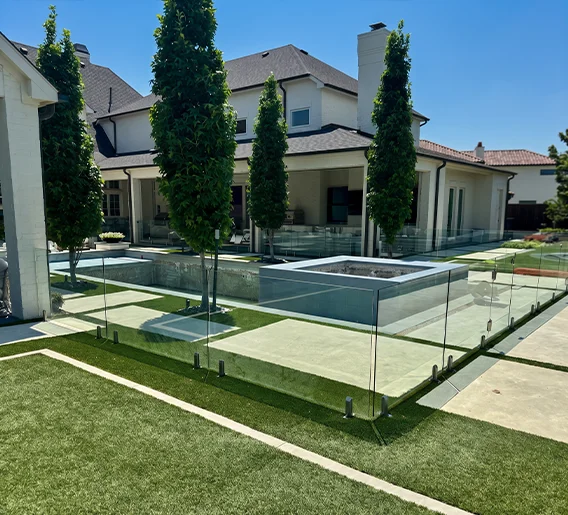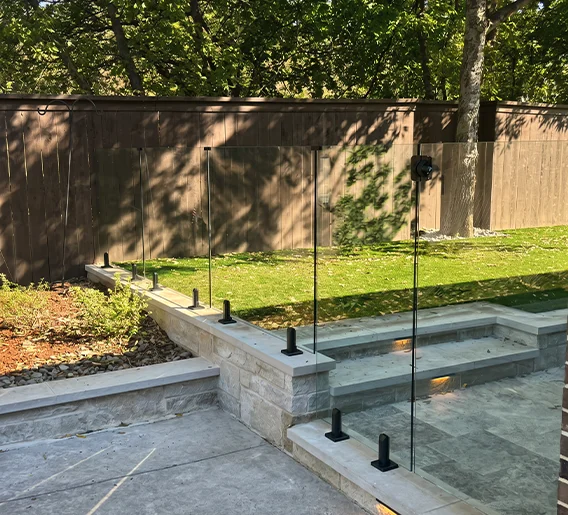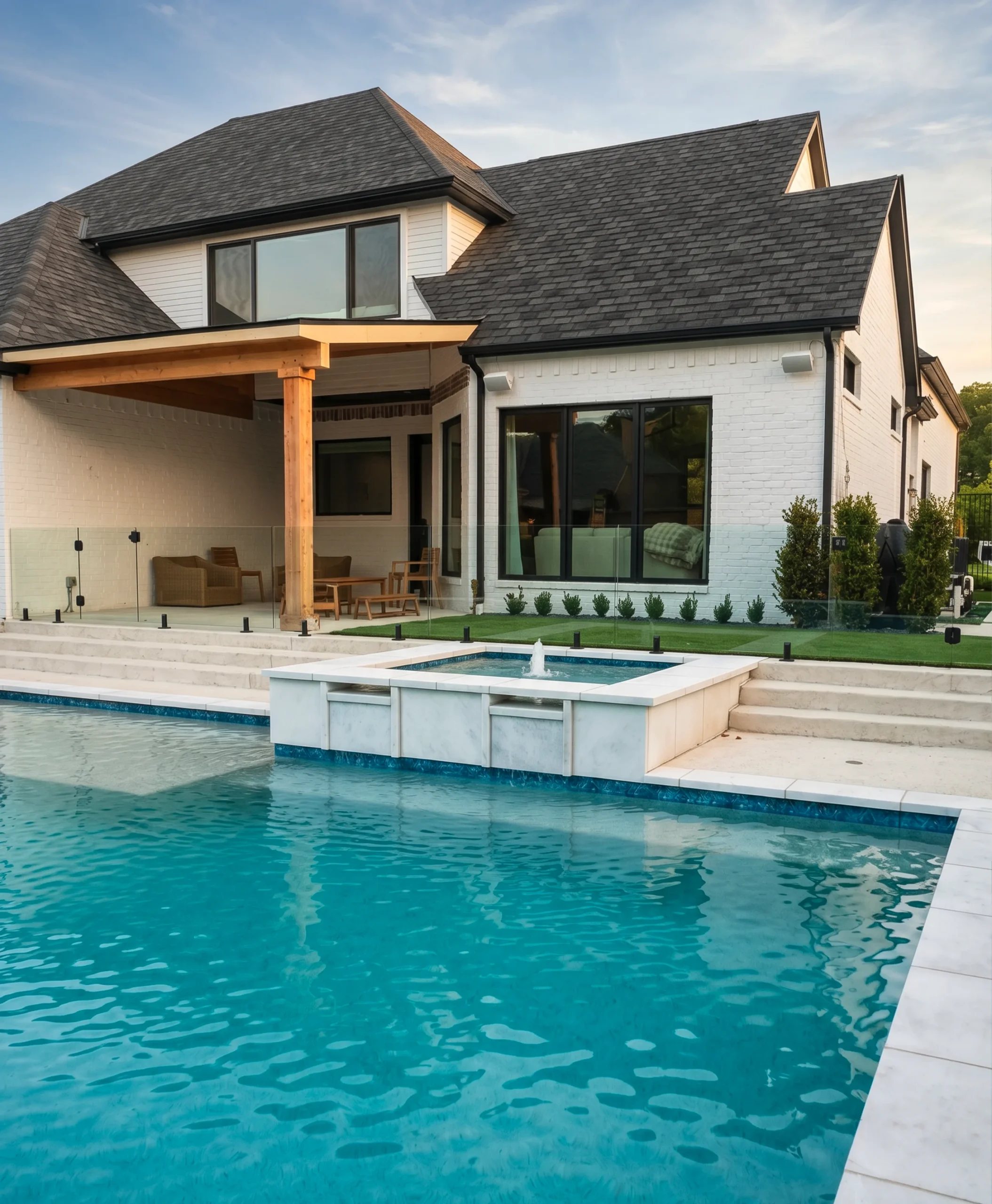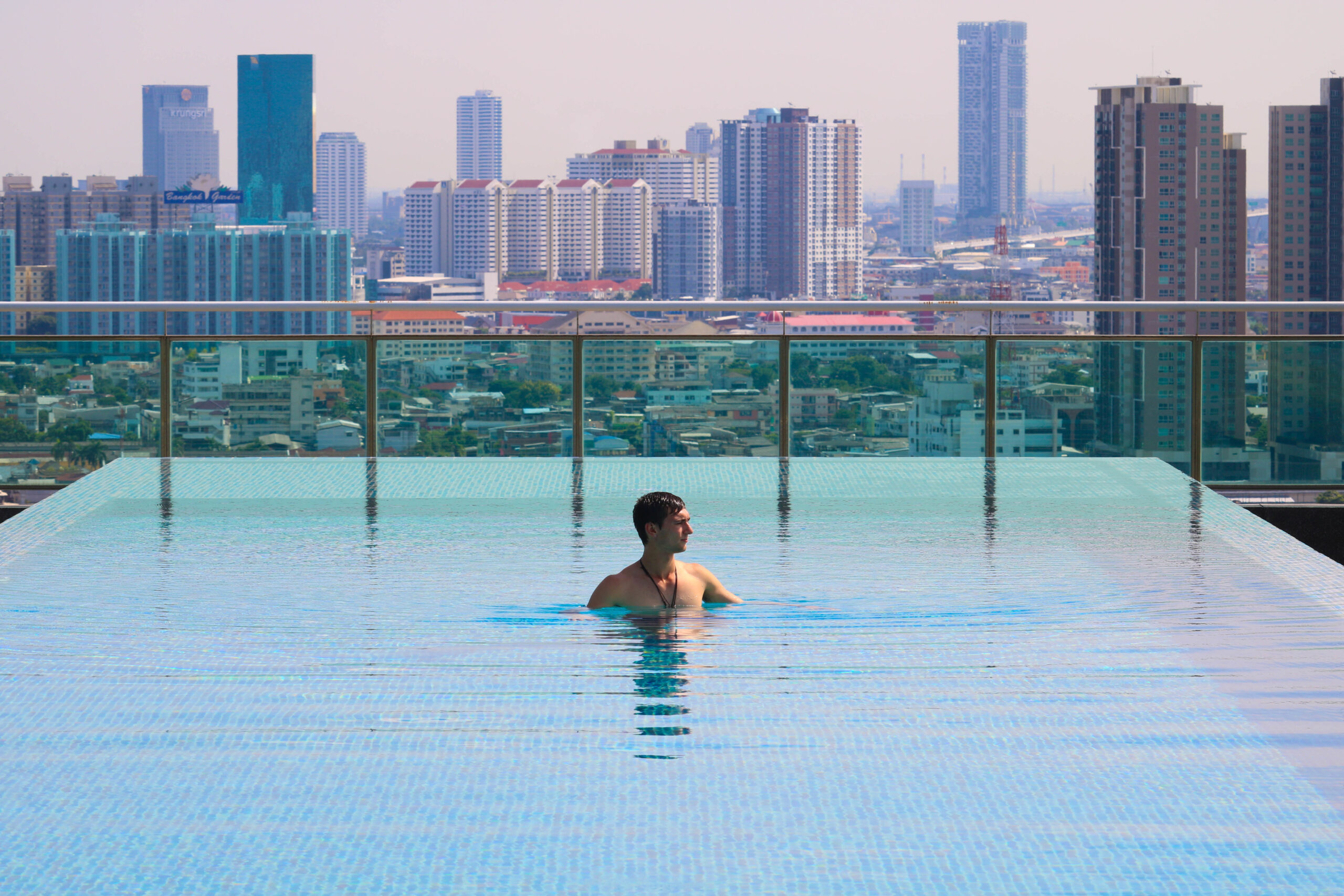

A glass pool fence does something most fencing materials simply can’t. Clear tempered glass transmits, reflects, and interacts with light in a way that wood, iron, and aluminum never will. That quality makes glass pool fencing a natural fit for LED lighting integration, and it’s a customization option more homeowners are requesting as outdoor living spaces become a bigger priority. If you’re considering elegant glass fencing and want to understand how LED lighting actually works with it, here’s what you need to know before the project begins.
How LED Lighting Works with Glass Pool Fencing
LED lighting for glass pool fences is typically integrated one of two ways: recessed into the base hardware or spigot fittings, or installed along the fence line at ground level to wash light upward through the glass panels.
In both cases, light passes through or reflects off the glass surface. Because tempered glass is clear and polished on the edges, light travels through the panel, creating a clean, even glow rather than a harsh point source. At night, the effect is a lit perimeter around the pool that reads as glowing glass rather than visible fixtures.
This approach works with both frameless and semi-frameless configurations. On frameless systems, LED components integrate into or alongside the spigot hardware. On semi-frameless systems, post-mounted fixtures or ground-level channel lighting along the fence base are the more common approaches.
What to Consider Before Adding LED Lighting to Your Installation
Electrical planning happens before installation, not after. If LED lighting is part of what you want, that conversation needs to happen during the estimate and design phase. Running conduit for low-voltage wiring under concrete decking is part of pool deck prep, and adding it after the fact means cutting into finished concrete, which costs more and produces less clean results.
Fixture quality matters at poolside. Any electrical component near a pool needs to be rated for wet or damp locations. In and across DFW, where pool season runs from March through October and humidity is a consistent factor, fixture ratings are not optional. Ask specifically for IP65-rated fixtures or higher for anything in contact with splash zones or ground-level moisture.
Low-voltage LED is the correct choice for pool-side integration. Standard line-voltage fixtures near water are both a safety concern and a code issue. Low-voltage LED systems operate at 12V, which is the standard for pool-side lighting. They’re safer, consume less power, and outlast older halogen or fluorescent alternatives by a wide margin.
Color temperature affects the finished look more than most people anticipate. Warm white LED in the 2700K to 3000K range gives glass fencing a soft ambient glow that reads well in the evening without competing with pool water lighting. Cool white or daylight-temperature LED at 5000K and above tends to look harsh against glass in an outdoor residential setting. Warm white is the more common choice, but the right call depends on your overall outdoor lighting scheme and personal preference.
Does LED Lighting Work on Glass Railing Systems Too?
The same lighting principles apply to glass railing systems on decks and balconies. Ground-level or post-mounted LED fixtures that wash light upward through tempered glass panels produce the same effect on a deck railing as they do on a pool fence.
For properties where the deck and pool area connect visually, running a consistent lighting approach across both creates a cohesive nighttime look that ties the outdoor space together. Glass railing systems for decks, balconies, and staircases across DFW and the broader area follow the same material and hardware standards as pool fence installations.
If continuity across the full outdoor space is part of the goal, it’s worth discussing both applications during the planning phase rather than treating them as separate projects.
What Questions to Ask Your Installer About LED Integration
Before committing to LED lighting as part of your glass pool fence project, get clear answers on a few specific points.
Ask whether electrical planning is included in the scope of work or needs to be coordinated separately with an electrician. Ask what IP rating is being specified for the poolside fixtures. Confirm whether conduit and wiring will be run before concrete deck work is finished, or whether this is being added to an existing deck after the fact.
Find out whether the LED components are covered under the product warranty or excluded from it. These questions separate installers who have completed this type of work before from those who are working through it for the first time. The answers tell you a lot about whether the person you’re talking to actually knows what the project involves.
Related Topics: