
Every residential swimming pool in Texas must be enclosed by a code-compliant barrier. That requirement is not discretionary, and it does not depend on the age of the pool. Texas Health and Safety Code Chapter 757 sets the baseline, and DFW municipalities layer their own requirements on top of it. What follows is a plain-language explanation of what the law requires, where local codes add to it, and how our quality glass fencing services verify compliance on every installation we complete.
What Texas State Law Requires
The state code establishes four core requirements for residential pool barriers.
Height. The barrier must be at least 48 inches tall. This measurement is taken from outside the barrier.
Self-closing gate. Every gate in the barrier must close automatically after being opened. A gate that requires manual pulling or pushing to close does not meet this requirement.
Self-latching gate. Every gate must latch automatically when it closes. The latch must be positioned out of the reach of young children, typically installed on the inside of the gate above 54 inches from grade or in a location that prevents a young child from reaching through to operate it.
Access restriction. The barrier must restrict unsupervised access to the pool by young children. This affects gap spacing, climbing resistance, and latch placement.
How DFW Cities Add to the State Standard
The state code is a floor, not a ceiling. Dallas, Fort Worth, Plano, Frisco, and other DFW municipalities maintain their own building codes that can be stricter than the state standard. Some cities require a permit before a pool fence is installed. Others have additional specifications on gate hardware or gap spacing.
HOA communities in Frisco, Prosper, and Southlake frequently layer their own fencing standards on top of both the state and city requirements. We recommend confirming HOA requirements before scheduling a site assessment. We verify city-specific code requirements for your address during the assessment itself.
What Counts as a Compliant Pool Barrier
Not every structure qualifies as a compliant pool barrier. There are a few common misconceptions worth addressing directly.
The house wall. The wall of the home can count as one side of the barrier in some configurations, but it cannot be the sole barrier. All doors and windows in that wall section that provide access to the pool area must be equipped with alarms that meet code specifications.
Landscaping. Shrubs, hedges, and plantings do not qualify as a barrier. They are not fixed structures and do not meet height or access restriction requirements.
Decorative fencing. Low ornamental fencing that does not reach 48 inches or lacks a self-latching gate does not meet the requirement regardless of the material used.
A compliant barrier is a fixed, non-climbable structure at least 48 inches tall with a self-closing, self-latching gate at every access point.
Why Glass Performs Well as a Compliant Barrier
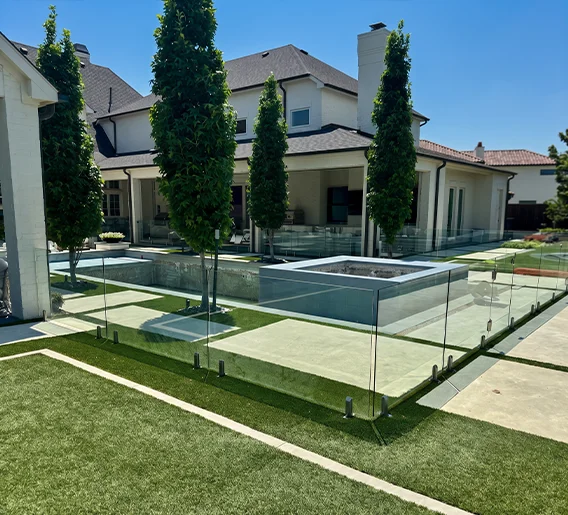
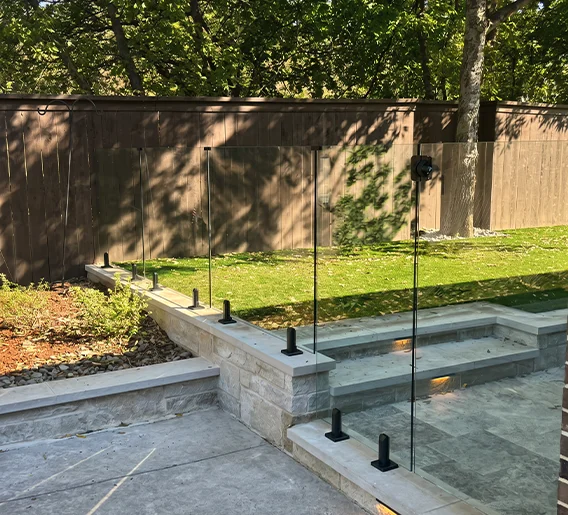
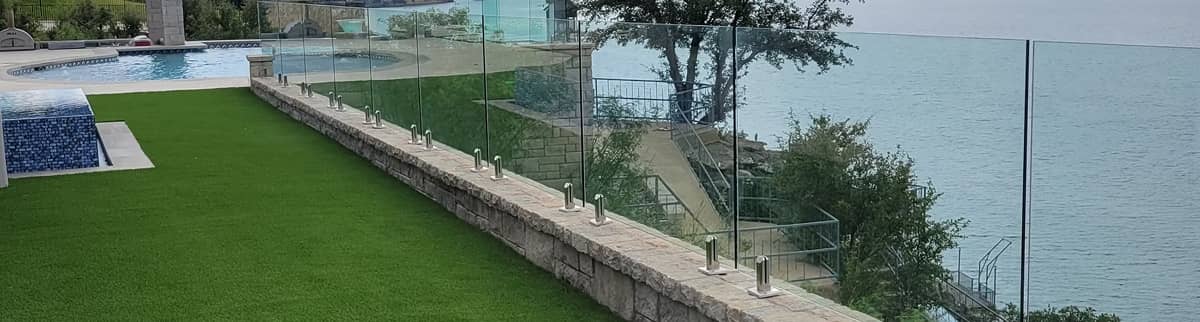
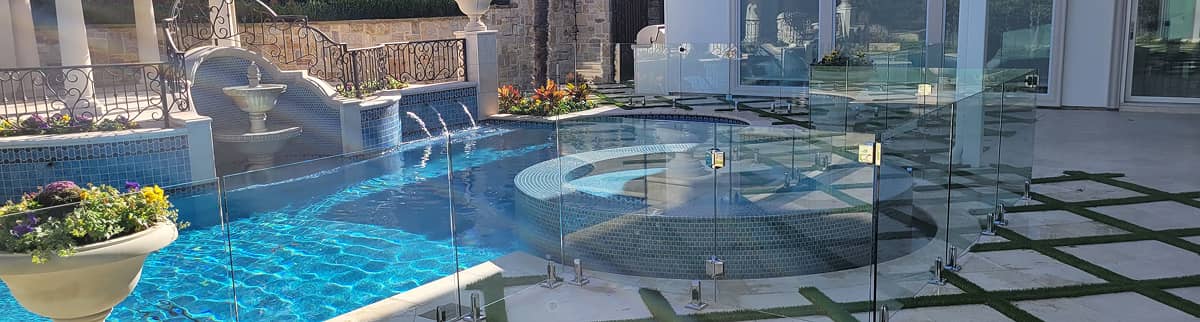
Frameless glass pool fencing meets every requirement under Texas Health and Safety Code Chapter 757. The panels reach the required height. Gates are installed with self-closing spring mechanisms and self-latching hardware on every installation we complete.
Glass also performs well on the non-climbing requirement. A frameless panel has no horizontal rails for a child to step on. There are no footholds between spigot mounts. The surface is smooth and flat, which makes it significantly harder to climb than a picket fence or a metal barrier with intermittent horizontal bars.
The added benefit is sightline preservation. A glass pool fence keeps the pool visible from inside the home, a passive supervision advantage that a solid barrier cannot offer.
How We Handle Compliance on Every Installation
Compliance verification is part of every site assessment we complete. We check the applicable code requirements for the project address before any material is ordered or installation begins. Gates are installed with self-closing and self-latching mechanisms as a standard part of every pool fence installation, not as an add-on.
Posts and spigots are anchored to engineering specifications for wind load and lateral force. After installation, a quality control inspection confirms that gaps, gate operation, and hardware are all correct before we hand off the project. Every installation is backed by a 1-year workmanship warranty and a 2-year product warranty on materials, with service calls available after both periods. We carry general liability insurance and workers’ compensation coverage, both meeting Texas requirements, and proof of insurance is available on request before any work begins.
What Happens If a Pool Fence Does Not Meet Code
A non-compliant pool barrier can result in a citation from the local building department, a failed inspection, or a requirement to bring the barrier into compliance before a property can be sold. Homeowner’s insurance policies may also include pool barrier compliance as a coverage condition. Beyond the legal exposure, a non-compliant barrier is a safety gap. The code requirements exist because pool drowning is among the leading causes of accidental death for children under five in Texas. A properly installed barrier closes that gap. For additional context on drowning prevention standards, CPSC Pool Safely provides national guidance that aligns with Texas requirements.
Related Topics: