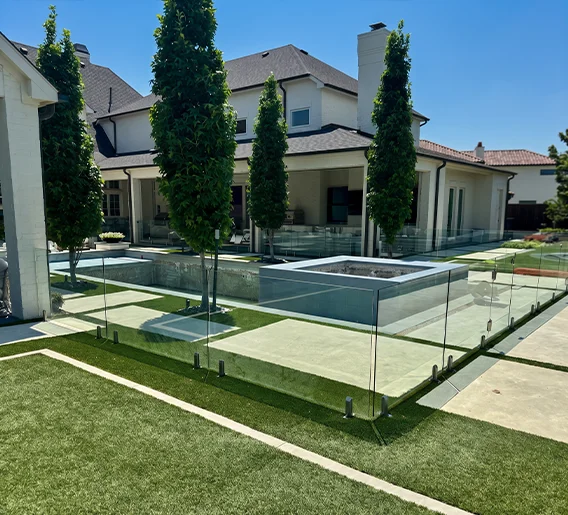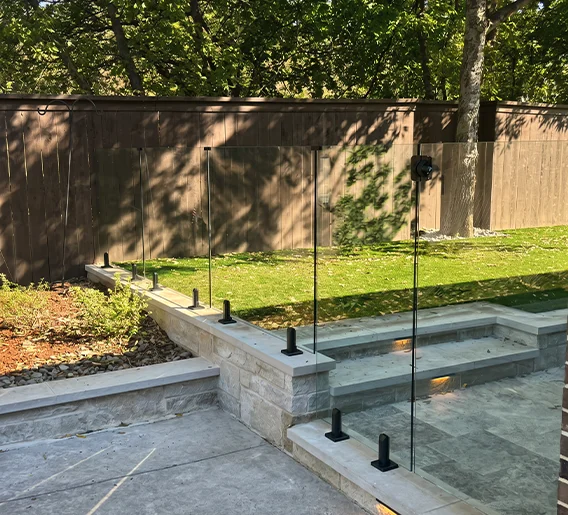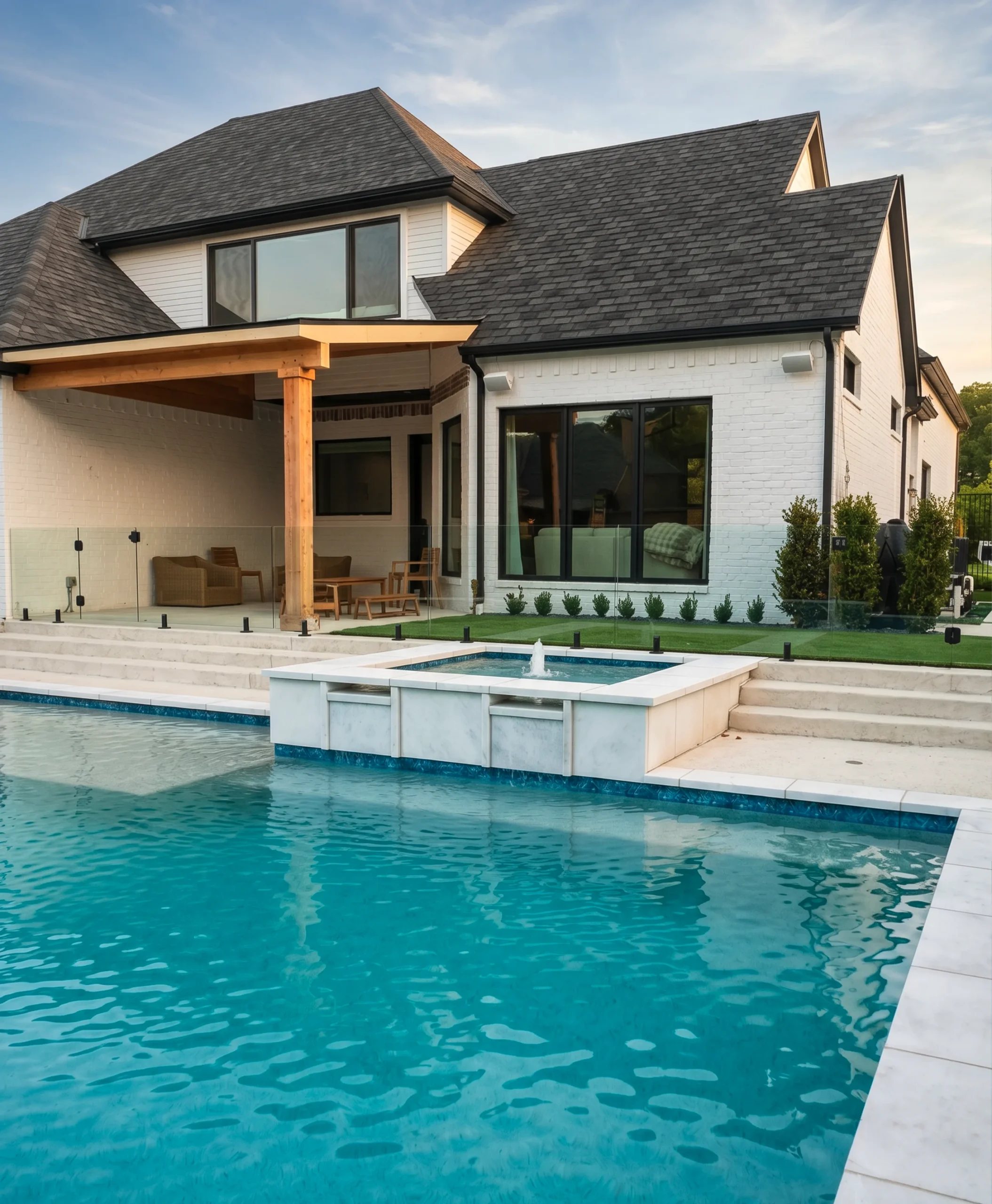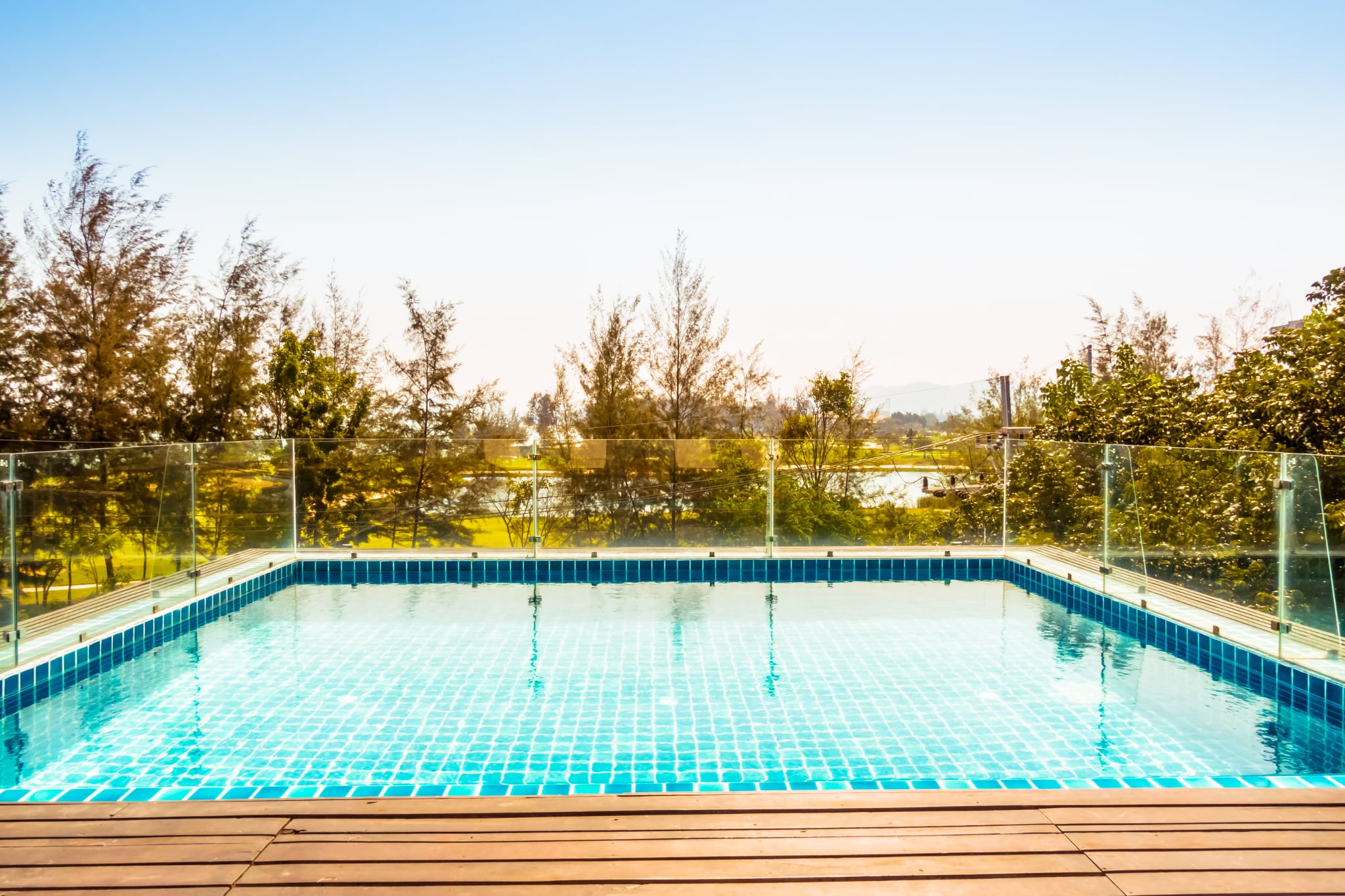


Texas sun is not subtle. In DFW and across the area, summer temperatures push past 100 degrees for weeks at a stretch, UV exposure is relentless, and a glass pool fence that looks sharp in April can show water spots, haze, and hardware stress by August without proper maintenance. High-end glass fence installation holds up to North Texas conditions better than any alternative material, but it still needs regular attention to stay looking its best through a DFW summer. Here’s what that maintenance actually looks like and why it matters.
Why Texas Sun Affects Glass Pool Fences Differently Than Other Climates
North Texas heat creates two conditions that work against glass pool fences: hard-water mineral deposits and thermal expansion stress on hardware.
DFW water is notoriously hard. When pool water splashes onto glass panels and evaporates in the heat, it leaves behind calcium and mineral deposits. Over time, those deposits etch into the glass surface if they’re not cleaned off. This is a maintenance issue, not a structural one, but it’s the most common reason glass pool fences in this area look worse than they should.
The second issue is thermal stress. Hardware anchored into concrete expands and contracts with temperature swings, and North Texas delivers both extremes. Marine-grade stainless steel handles that stress better than standard stainless, which is one of the reasons it’s the correct specification for poolside installations in this climate.
How to Clean Your Glass Pool Fence During Texas Summers
Glass panels need more frequent cleaning during the summer than at any other time of year. In DFW, once a month at a minimum during June through September is a reasonable baseline.
Use a mild dish soap or a dedicated glass cleaner mixed with warm water, applied with a soft microfiber cloth or a non-abrasive sponge. Work panel by panel and rinse each one thoroughly before the water has a chance to dry in the sun. Letting soapy water dry on glass in Texas heat is a reliable way to leave behind residue that compounds the problem.
For hard water deposits that have already set, diluted white vinegar applied with a microfiber cloth breaks down mineral buildup without scratching the glass surface. Rinse thoroughly after. Do not use abrasive pads, steel wool, or any scouring compound on tempered glass under any circumstances.
Protecting Hardware from Heat and UV Exposure
Marine-grade stainless steel hardware is corrosion-resistant, but it still benefits from periodic inspection and basic maintenance.
Once or twice a year, check all hardware bolts, spigot fittings, and gate hinges for tightness. Thermal expansion and contraction through a Texas summer can gradually loosen hardware that was properly torqued at installation. A thorough inspection of a standard residential fence line takes less than 20 minutes and catches issues before they become structural concerns.
If you notice discoloration, pitting, or surface oxidation on any hardware components, address them early. A small amount of surface rust caught early is a cleaning issue. Left through another DFW summer without attention, it becomes a hardware replacement issue.
Does 1/2″ Tempered Glass Handle Texas Heat Better Than Thinner Glass?
Yes, and the difference is meaningful in a climate like North Texas.
Thicker glass handles thermal stress more effectively than thinner glass. The industry standard for pool fencing is 3/8″. At 1/2″, tempered and polished safety glass provides considerably greater protection against impact, wind loads, and temperature extremes. In a climate that moves from 105-degree summers to hard freezes, that thickness difference is not a luxury specification. It’s the right baseline for the conditions.
Panels at 3/8″ are code-compliant, but they operate closer to their design limits in North Texas weather. The difference shows up over time, and it’s one of the reasons we don’t install to the minimum on any project.
Shade, Reflection, and Pool Chemistry Considerations
Glass pool fences facing west in DFW take direct afternoon sun for most of the summer day. This doesn’t damage the glass, but it accelerates the evaporation of any water or cleaning residue on the surface, which increases the rate of hard-water deposit buildup.
If your fence line gets heavy afternoon sun exposure, add a mid-summer cleaning pass to your routine. It takes about 30 minutes and keeps deposits from etching in before they become harder to remove.
Pool chemical splash is another factor worth accounting for. Chlorine and other pool treatment chemicals are generally safe for tempered glass, but consistent heavy splash exposure over time leaves residue on the lower panels near the waterline. Include those lower panels in every routine cleaning pass, even when they appear clear from a distance. By the time the buildup is visible from several feet away, it has usually already started to set.
Related Topics: