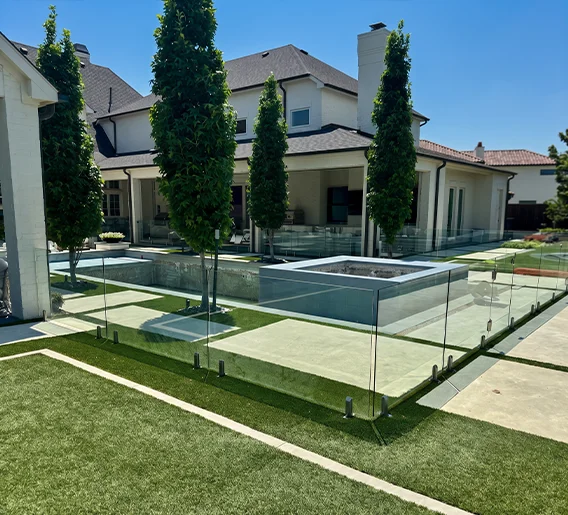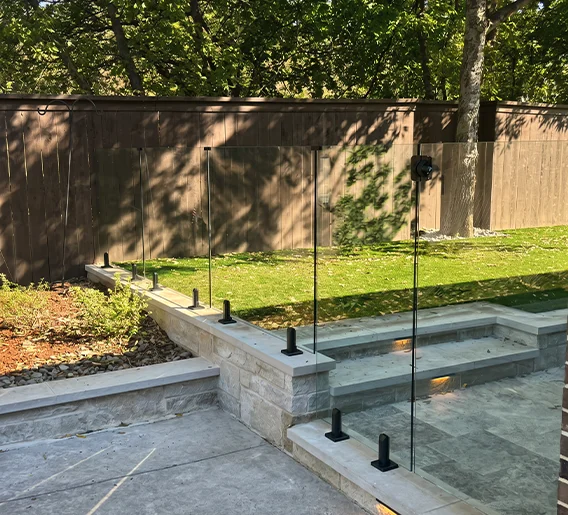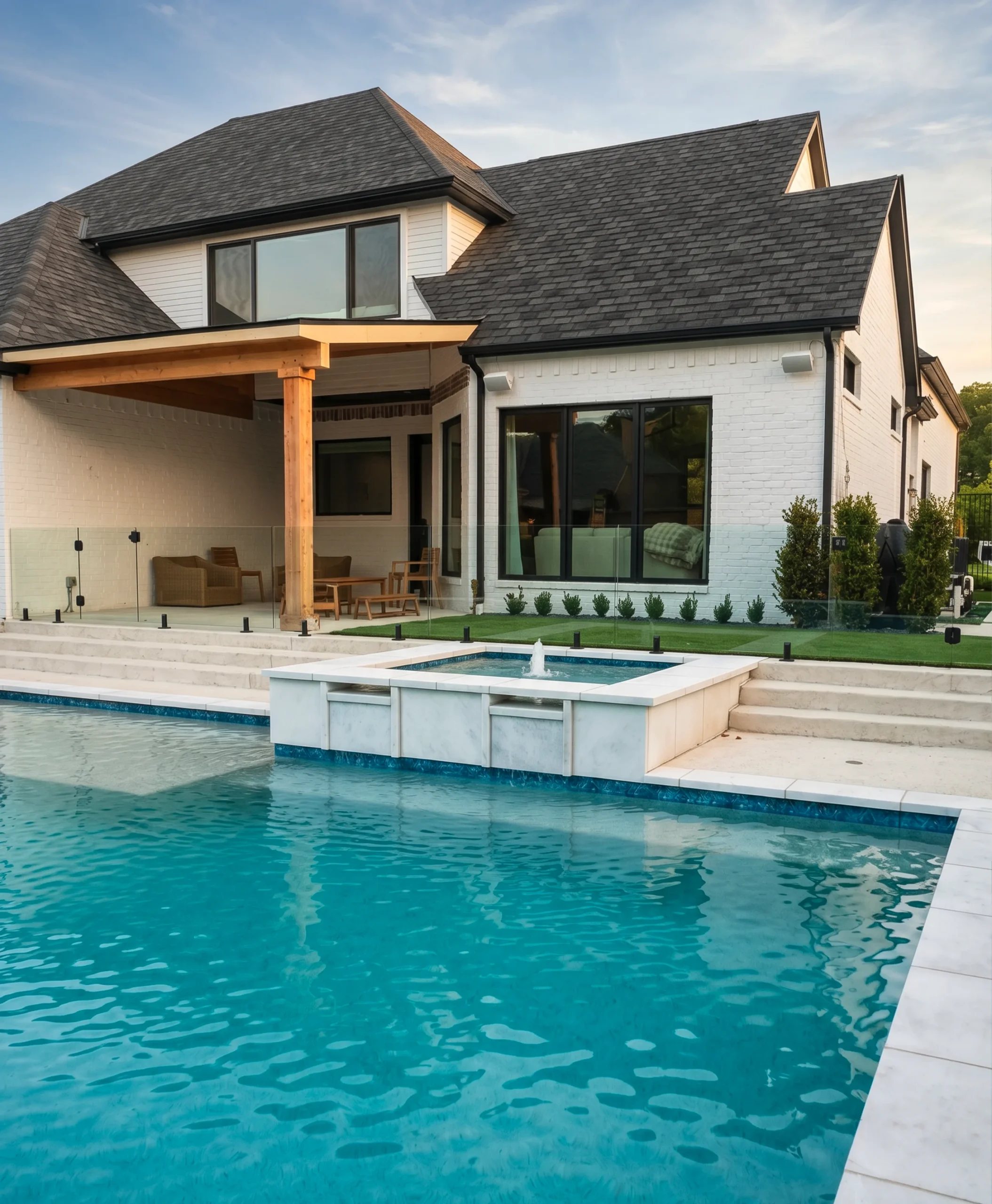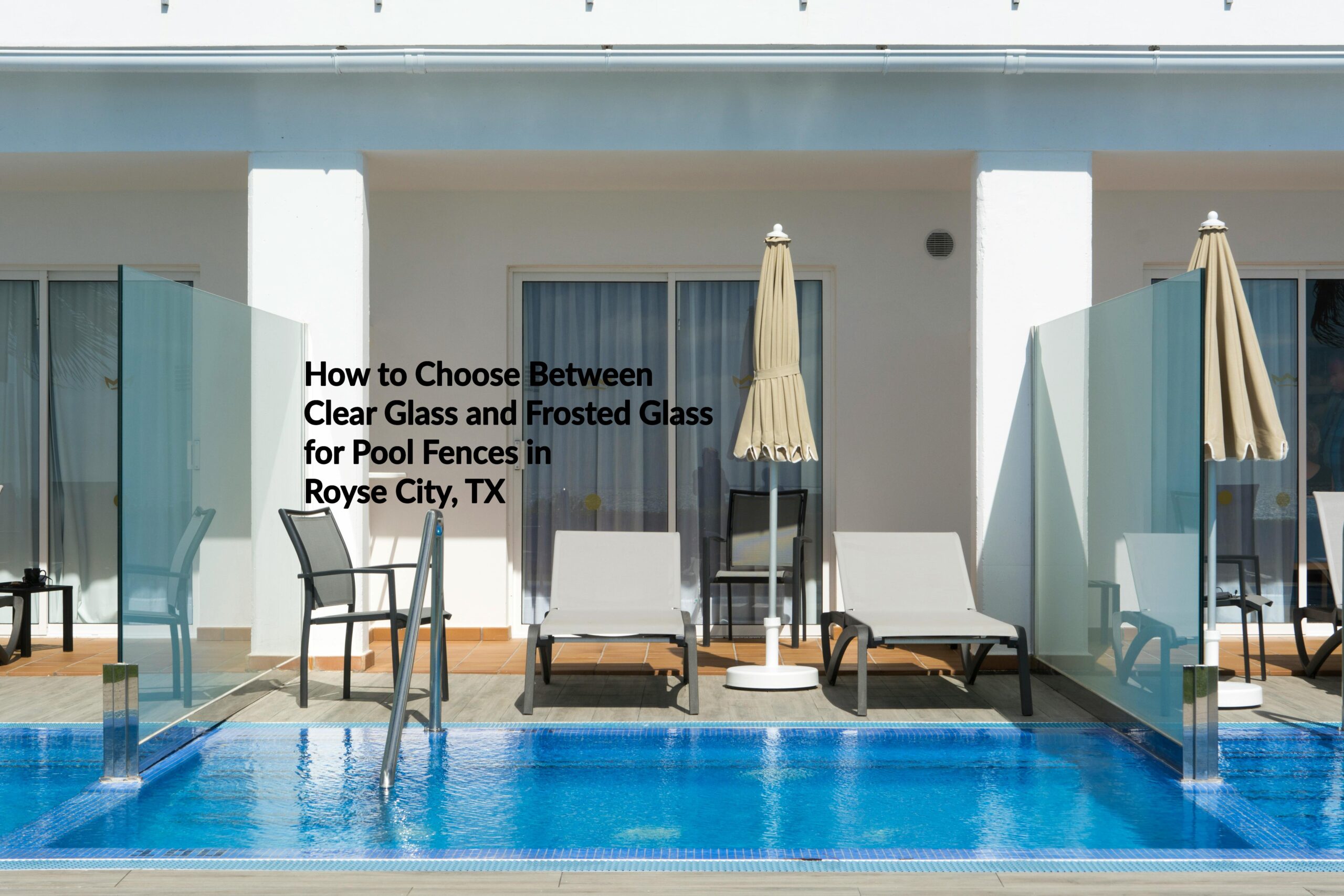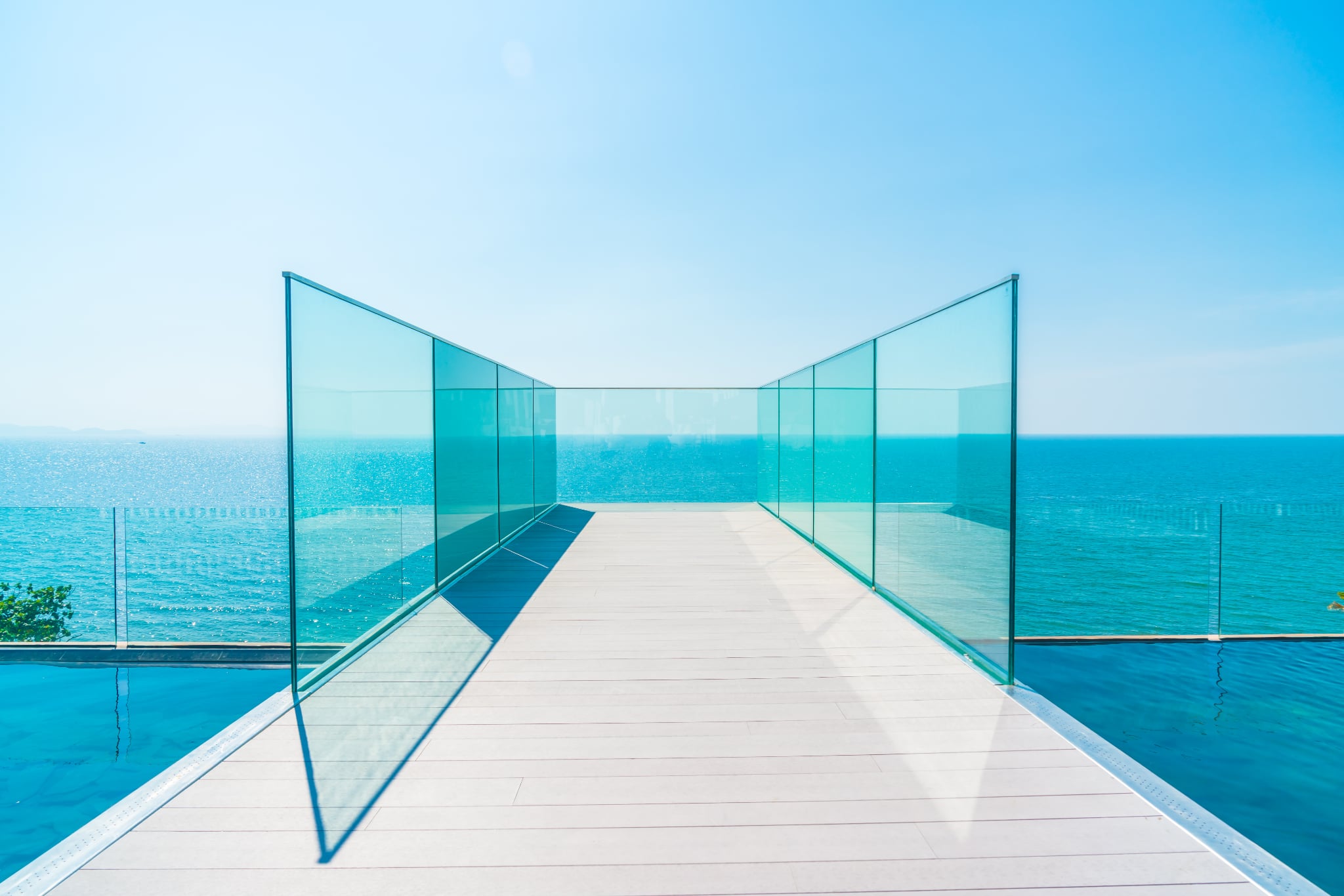
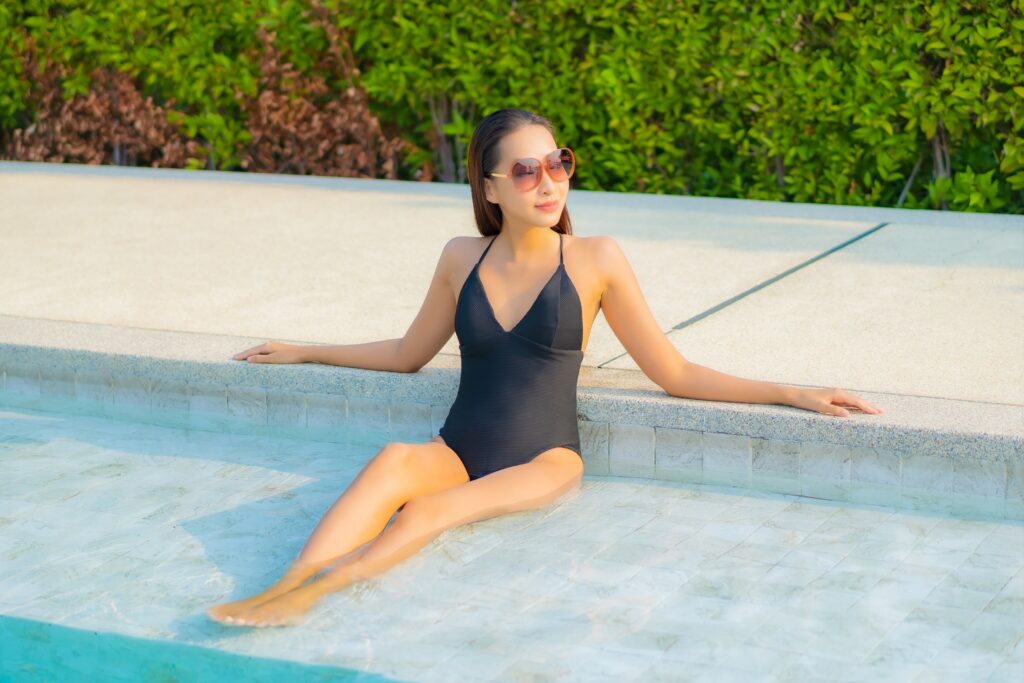

Small pools are common. Lot sizes in many of the area’s newer communities make a full resort-style pool impractical, so homeowners build smaller plunge pools, cocktail pools, or compact in-ground pools that fit the available space. With limited room to work with, a modern glass fence installation often becomes the smartest barrier choice for these properties. The challenge with a small pool is that every design decision, including the fence, has a bigger visual impact. A fence that closes off the space makes a small pool feel even smaller. Glass does not.
Why Solid Fences Make Small Pool Areas Feel Cramped
A wood or iron fence around a small pool creates a hard visual boundary that separates the pool from the rest of the yard. From inside the house or from the patio, the pool disappears behind the fence line. What could feel like an open outdoor water feature ends up feeling like a fenced-off corner.
That visual effect is not just an aesthetic issue. When you cannot see the pool clearly from the house, supervising young children becomes harder. The fence meant to keep kids safe actually makes it more difficult to monitor the pool area from a distance.
How Glass Opens Up a Small Pool Space
Frameless glass pool fencing is nearly invisible once installed. The panels hold the perimeter, comply with pool barrier codes, and protect children and pets from unsupervised pool access, but they do not interrupt the sightlines that make a small outdoor space feel open.
From inside a home with a small backyard pool, a glass fence around the pool perimeter lets the pool read as part of the yard rather than a separate enclosed zone. That visual continuity is what makes a compact pool feel more like a considered design feature and less like a safety afterthought.
We install 1/2-inch tempered and polished safety glass on every pool fence project, including small pools. Custom panel sizing is available for non-standard layouts. If you’re weighing frameless versus semi-frameless for a compact space, our frameless vs. semi-frameless guide covers the key differences.
Custom Sizing for Non-Standard Pool Shapes
Small pools in are often not rectangular. Plunge pools, L-shaped pools, and freeform designs are common in the compact lots of newer DFW communities. These shapes create irregular perimeters that a standard fence panel system handles poorly.
We handle custom panel sizing as a standard part of the installation process. During the site assessment, we measure the full perimeter, account for any angles or curves, and confirm the panel dimensions before fabrication. The finished fence follows the pool shape rather than working against it.
Self-Closing Gates That Work in Tight Spaces
One concern homeowners sometimes raise about small pools is whether a glass fence gate will be functional in a tight space. Self-closing and self-latching gate hardware is required by Texas Health and Safety Code Chapter 757, and it needs to open and close without obstruction.
We design gate placement during the site assessment, factoring in the available clearance, the direction the gate needs to open (away from the pool, per code), and the traffic patterns around the pool. In tight spaces, getting this right from the start matters. We confirm all gate clearances before installation begins.
The Right Fence Spec for a Small Pool
Some installers use 3/8-inch glass panels on smaller residential projects. We use 1/2-inch tempered and polished safety glass on every installation, including small pools. The thicker panel provides better impact resistance, a longer service life, and a more substantial physical presence that looks appropriate against a well-designed outdoor space.
For a small pool where every detail is visible, the quality of the glass matters. Thicker glass has a visual weight that cheaper panels do not. It reads as a permanent, quality feature rather than a fence that was added after the fact.
Related Topics:
- Glass Railings for Balconies: Enhancing Your Home’s Outdoor Living Spaces
- Why Glass Pool Fences Are a Long-Term Investment for Homeowners